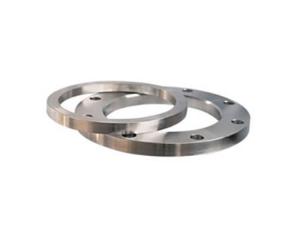
Blind flanges do three jobs. They close the end of a line that will later be extended, so the extension bolts on instead of being welded. They close equipment nozzles and manway-adjacent openings for pressure testing and maintenance access. And they provide the test boundary for hydrotesting a section of plant. In each case the blind takes the full pressure end-load on its bolting, which is why blinds are forged and machined to the same class tables as the flanges they mate with.
A blind has no hub and no bore, but everything else about the order is the same: NPS, class, facing and grade must match the mating flange exactly — an RTJ blind against an RF flange is a leak with paperwork.
| Item | Range / Options |
|---|---|
| Standards | Confirmed per product at enquiry — catalogue executions are RTJ blinds in Class 150 / 300 / 600 |
| Size range | Confirmed per product at enquiry |
| Pressure classes | Catalogue executions: Class 150 / 300 / 600 (RTJ); further classes confirmed per product at enquiry |
| Faces | RTJ in catalogue executions |
| Materials | Carbon steel ASTM A105 in the Class 150 and Class 600 catalogue executions; the grade of the Class 300 execution and further grades are confirmed per product at enquiry |
| Options | Confirmed per product at enquiry |
Blind Flange or Butt Weld Cap?
If the closure will be opened again — for inspection, cleaning, testing or future tie-in — a blind flange earns its bolting. If the end is permanent, a butt weld cap is lighter, cheaper and has no gasket to maintain. Many lines use both: caps on permanent ends, blinds at equipment and test boundaries.
Handling the Heavy Classes
At Class 600 and above, and at large NPS in any class, a blind is a heavy forging that two fitters cannot hold against a flange face while starting bolts. Lifting eyes and handling arrangements are worth specifying on the order for large or high-class blinds; the forging itself is made to the standard's full thickness for the class, with no lightening.
Positive Isolation Note
A blind flange gives positive isolation when fully bolted. For in-line isolation that must be changed without breaking a flange joint apart completely, the related product is the spectacle blind, which swings between its blank and open positions.
Frequently Asked Questions
Do blind flanges need a gasket?
Yes — a blind bolts against a mating flange face with a gasket between, exactly like any flanged joint. Match the gasket to the facing: spiral wound or sheet for RF, full-face for FF, and a metal ring for RTJ.
How is a blind flange's thickness set?
By its class: the blind is made to the standard's full thickness for the class of the mating flange, with no lightening, so the class and facing on the order must match the joint it closes.
Which face should I order — RF or FF?
Match the mating flange. RF is the process standard; FF is used against cast iron or other brittle flanges and with full-face gaskets. The two are not interchangeable at the joint.
Are blind flanges available in large diameters?
Large-diameter blinds close large line ends and vessel openings. Availability for a specific size is confirmed per product at enquiry — state the size and the governing standard your specification calls up on the enquiry.
Related Products
Send Your Specification
Tell us the size, schedule or pressure class, material grade and quantity for the blind flanges you need. MOQ and lead time are confirmed in the quotation for your exact specification.