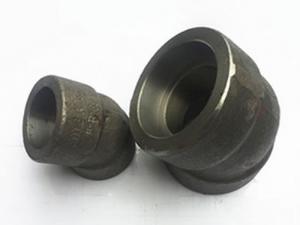
The flange bore carries an internal taper thread that matches the external thread cut on the pipe. Made up with thread sealant or tape, the joint is a flanged connection on one side and a threaded connection on the other. Threaded flanges are produced across the usual flange classes, but practical use concentrates on smaller sizes and the lower-to-middle classes, because thread engagement and wall at the thread root set the joint's limits.
The trade-off is honest: a threaded joint can weep under thermal cycling and vibration in a way a welded joint does not, and most process specifications restrict threaded connections by size and service. Where the specification allows them, they save real time and remove hot work entirely.
| Item | Range / Options |
|---|---|
| Standards | Confirmed per product at enquiry — state the thread form your pipe carries |
| Size range | Confirmed per product at enquiry |
| Pressure classes | Confirmed per product at enquiry |
| Faces | Confirmed per product at enquiry |
| Materials | Confirmed per product at enquiry |
| Assembly | Thread sealant or PTFE tape per service; seal weld optional where permitted |
Where Threaded Flanges Earn Their Place
Instrument and utility tie-ins, galvanised and coated lines where welding would destroy the coating, temporary and test installations, and hazardous-area work where hot work is controlled. They are also the natural partner of the threaded forged fittings range — a fully threaded small-bore system uses the same thread form throughout.
Limits to Respect
Do not specify threaded flanges for severe cyclic service, lethal media, or where the piping specification prohibits threaded joints — many do above NPS 2. The thread must be cut on pipe with enough wall to carry it, which in practice means Schedule 80 or heavier for small sizes. If in doubt, the welded alternatives are weld neck and socket weld flanges.
Ordering
State NPS, class, facing, grade and the thread form your pipe carries — the execution for the specific product is confirmed against that form at enquiry. If the pipe is galvanised, say so — thread engagement on coated threads differs and the order notes should carry it.
Frequently Asked Questions
Can a threaded flange joint be seal welded?
Where the specification permits, a seal weld at the pipe-to-flange interface is often added after make-up to lock the joint and stop thread weepage. It is optional and must be stated — many buyers choose threaded flanges precisely to avoid welding.
NPT or BSPT threads?
NPT and BSPT are the two taper thread forms in common use, and they are not compatible with each other — a joint made up across the two will not seal reliably. Name the thread form your pipe carries on the enquiry; the execution for the specific product is confirmed against it before order.
What pipe schedule suits threaded flanges?
The thread cuts into the pipe wall, so heavier walls are used: Schedule 80 is the common minimum in small sizes, Schedule 160 or XXS at higher classes. Match the schedule to the class and service.
Which sizes are threaded flanges most used in?
In general practice, small and medium bore — NPS 1/2 to 4 covers most threaded flange work: instrument connections, utility take-offs and equipment nozzles on packaged skids. Above that, welded flanges take over almost everywhere. That is general practice, not a size range for this site: the size of a specific product is confirmed at enquiry.
Related Products
Threaded Fittings
The threaded fitting range — catalogue execution: a 3 inch Class 3000 NPT plug in A105.
Send Your Specification
Tell us the size, schedule or pressure class, material grade and quantity for the threaded flanges you need. MOQ and lead time are confirmed in the quotation for your exact specification.